
Smooth, even, square
Ave Maria Garage Door Repair for Doors That Bind or Jam
Track plumbed to the jamb, brackets drawn tight, rollers and hinges renewed and cable drums wound evenly, so the door lifts and lowers level without a snag.
Describe how the door moves — (239) 445-4425Four Ways a Door Tells You Its Travel Is Off
Jamming partway up
A door that halts at the same height on every trip is catching where a bent rail, a loose joint or a dragging roller meets the curve. Forcing it deepens the catch.
Grinding or shuddering
Grinding points to a seized roller bearing or a rail the wheel keeps rubbing. Shuddering means the door is skipping along, usually over wheel flats or a kinked stretch of track.
One side riding low
A corner hanging lower than the other suggests a cable has jumped its drum, a bottom bracket has loosened or a track bracket has pulled loose, so the two sides lift unevenly.
Rollers creeping from the channel
A wheel drifting toward the lip of the rail, or a panel that tilts as it climbs, is the stage just before the door drops out of the track on one edge.
What gets repaired
Fourteen Services Built Around One Aim: A Door That Travels True
Each service page explains the mechanism involved, the signs that point to it and how the repair is carried out. Begin with the symptom you can see or hear, then follow it to the part responsible.
- Garage Door RepairRepair that treats the door as one moving system, tracing a bind, sag or rattle back to the part that began it.See how this repair works
- Garage Door Spring RepairTorsion or extension springs are chosen by measured door weight, then wound until the door hovers level and lifts evenly.See how this repair works
- Garage Door Cable RepairFrayed or slipped lift cables are replaced and seated in their drum grooves at equal tension, so both bottom corners rise together.See how this repair works
- Off-Track Garage Door RepairA derailed door is clamped, the rail and brackets corrected first, then rollers reseated and the full travel checked.See how this repair works
- Garage Door Roller & Hinge ReplacementWorn rollers and cracked hinges are renewed as complete sets, ending rubbing, shuddering and the creeping that precedes a derailment.See how this repair works
- Garage Door Panel RepairDented or bowed sections are corrected or swapped, then the door is rebalanced so panels stack square and stop binding.See how this repair works
- Garage Door Opener RepairThe door is tested by hand first, so a binding track is not blamed on the motor, then the fault is repaired.See how this repair works
- Garage Door Opener InstallationA new opener is mounted square to the door's centerline on a door balanced first, so it steers instead of hauling.See how this repair works
- Garage Door Sensor RepairSensors knocked out of line are realigned, cleaned and rewired, so the door closes fully instead of stopping short or bouncing back.See how this repair works
- Garage Door Weather Seal ReplacementHardened bottom seals and tired jamb stops are replaced and set to seat the door evenly without drag.See how this repair works
- Garage Door Tune-Up & MaintenanceA tune-up checks plumb, fasteners, rollers, cables and balance, catching small misalignments before they bind the door.See how this repair works
- New Garage Door InstallationA replacement door goes into a squared opening with plumb track and matched springs, built to the approved details for that opening.See how this repair works
- Hurricane-Rated Garage DoorsWind-rated doors go in to approved details, with reinforced sections and braced track that must stay exactly plumb to perform.See how this repair works
- Commercial Garage Door RepairSectional and rolling steel doors are repaired by finding where travel binds, guides rub or heavier hardware has worked loose.See how this repair works
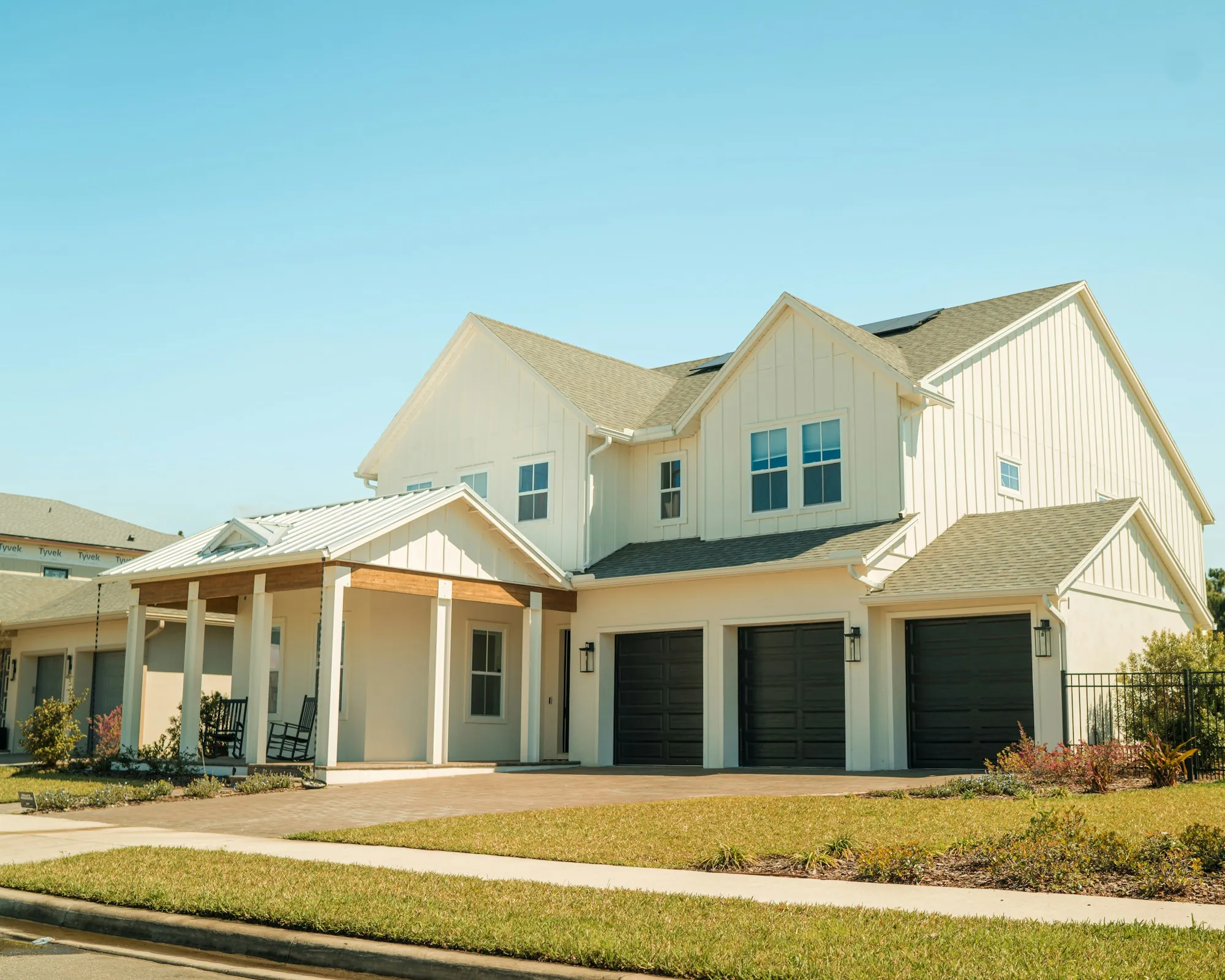
Whole-system alignment
Aligning a Door Means Aligning Everything It Rides On
A sectional door is guided in three places at once: roller stems in the track, hinges between sections and cables wound onto drums at the shaft. When one of them sits a little out of true, the other two absorb the error, which is how one bend wears rollers, cracks a hinge and loosens a bracket.
So alignment starts at the jamb. Each vertical track is leveled and measured at several heights against the door edge, horizontal runs are compared for spacing, and fastening is tested before anything is adjusted. Only then are rollers, hinges and drums judged against track that is known to be straight.
- 1
Track plumb and spacing
Vertical rails are set plumb and an even distance from the door edge top to bottom, with the horizontal runs parallel, so each roller finds the same running clearance everywhere.
- 2
Brackets and lag bolts
Every track bracket is tried for movement. Stripped holes get longer lags or through-bolts into solid framing, because a track is only as straight as the screws pinning it.
- 3
Rollers and hinges
Worn, flat-spotted or cracked pieces are replaced as a set and hinge leaves are checked flat against the section, so no single wheel or joint pushes the door sideways.
- 4
Cable drums and tension
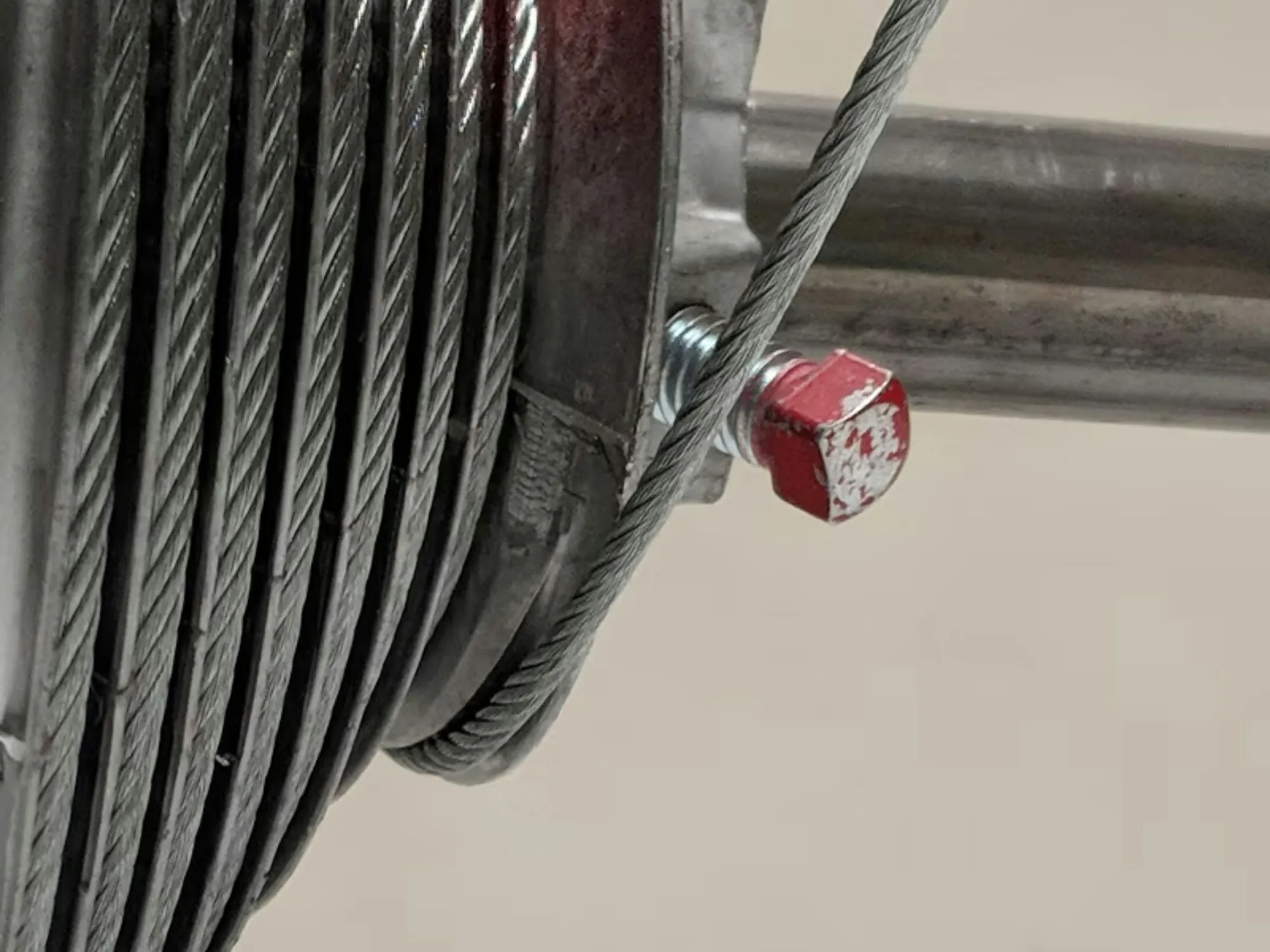
Cables are seated in the drum grooves and drawn to equal tension on both sides, which lifts the bottom corners together and keeps the door level all the way up.
When it has left the track
A Door Off Its Track Should Be Left Where It Is
Doors leave their tracks for a few mechanical reasons: a knock that creases the rail, a roller that cracks or loses its stem, a bracket that lets the track spread, or cables lifting unevenly. Whatever the cause, the door now hangs on fewer guides than it needs, with spring force still loaded.
Running the opener or pulling on the door pushes the crooked panel into a bent rail and can unwind a cable from its drum. The safe return is deliberate: clamp the door, release spring tension under control, correct rail and brackets, reseat the rollers, verify drums and cables, then cycle the travel by hand before reconnecting the opener.
How the Work Is Approached
Cause before cure
A door that binds has a reason, and that reason is found before parts are ordered, so a straightened rail is not asked to do the job of a replaced hinge.
Measured rather than eyeballed
A level, a tape and a hand-lift test decide whether something is square. Spacing and plumb are recorded as numbers, not guessed from across the garage.
Whole travel proven
Once parts are fitted, the door is run the full distance in both directions several times, and the opener is reconnected only after the manual travel feels easy.
Four Steps From Binding to Smooth
The sequence below is the same for a faint scrape or a door hanging from one corner. Only how much hardware gets touched changes.
- 01
Watch it travel
The door is moved by hand with the opener released, so the catch, tilt or heaviness shows exactly where along the travel it begins.
- 02
Level and measure
Tracks, brackets, drums and hinges are checked against plumb and spacing, which identifies which part has moved and which only looks guilty.
- 03
Correct what drifted
Bent rail is straightened or swapped, brackets are refastened, worn rollers and hinges replaced and cables brought to equal tension.
- 04
Run the full travel
Balance, travel limits and the stopping response are proven through repeated cycles, ending with a door that moves evenly from floor to ceiling.
Questions People Ask About Doors That Misbehave
- Why does my garage door make so much noise, and can that be reduced?
- Rattling, scraping and groaning come from specific parts: dry hinges, worn or steel rollers, loose track brackets, a tired spring or a rough opener drive. Tightening hardware, renewing rollers and lubricating correctly usually brings the sound down a lot.
- Is it safe to keep using the door with a fraying cable or a broken spring?
- No. With a snapped spring the full door weight lands on the cables and opener, and a frayed cable may let go suddenly, so one corner can drop. Leave the door shut, keep the opener unplugged and keep people and cars clear until it is repaired.
- If one spring snapped, should both be replaced?
- Generally, yes. Paired springs have lived through the same number of lifts, so the survivor is close to failing too. Changing both also keeps the lifting force even, which stops the door tilting as it rises.
- What keeps my door from fully shutting, or sends it back up?
- Usually the door believes something is in its path. A knocked sensor, a limit set too early, a seal dragging on the slab or a binding track can each trigger it. Isolating which one takes a few minutes of checking.
- How often does a garage door need servicing?
- Most households do well with one check each year, covering fasteners, rollers, cables and balance. A door used many times daily, or one that is unusually heavy, gains from a look about twice as often as that.
- Can you work on any opener and door make?
- Most residential sectional doors and common openers rely on the same mechanics, so the approach carries across makes. If yours is unusual, describe it and read out the label on the motor head or door.
Communities Along the Route
Doors bind for similar reasons everywhere, but the garages differ from one community to the next. These are the places the work usually reaches, and a quick description of where you are will confirm the rest.
Ave Maria
Attached garages where a door that rubs one side shows itself early, and where a plumb check of both vertical tracks usually settles why.
Immokalee
A spread of older and newer garages, many with tracks that have loosened or flexed over the years and now bind where rollers cross the curve.
Orangetree
Doors that cycle daily and have begun to shudder or lean, often because rollers have flattened or a bracket has worked slightly loose.
Golden Gate Estates
Wide doors on large lots, including detached garages, where long tracks and heavier sections punish any small misalignment.
Corkscrew
Rural-edge properties with outbuilding doors that sit idle for stretches, then bind or stick when the hardware is finally asked to move.
North Naples
Established garages whose doors have shifted with the framing, leaving tracks slightly out of plumb and cable drums winding unevenly.
A Door That Catches Is Telling You Something
Note where it hesitates, which side drops and what it sounds like. Those three details usually point to the right part before anyone arrives.

Put the Door Back on a Straight Path
Whether it scrapes a little or hangs from a corner, the repair begins with a conversation about how the door moves.
Talk through the problem — (239) 445-4425